Latest posts
-
The AI Audit Trap: How EU Tax Algorithms Score Your Business

Global Trade & Indirect Tax Series — Part 6 | Part 1: The Green Ledger — CBAM | Part 2: EMEA E-Invoicing | Part 3: ViDA — The Three Pillars | Part 4: CESOP — Payment Surveillance | Part 5: DAC7 and DAC8 The Warm-Up Part 6 – The AI Audit Trap: How EU Tax
-
DAC7 & DAC8: Guide for Indian Sellers on Amazon & Upwork (2026)
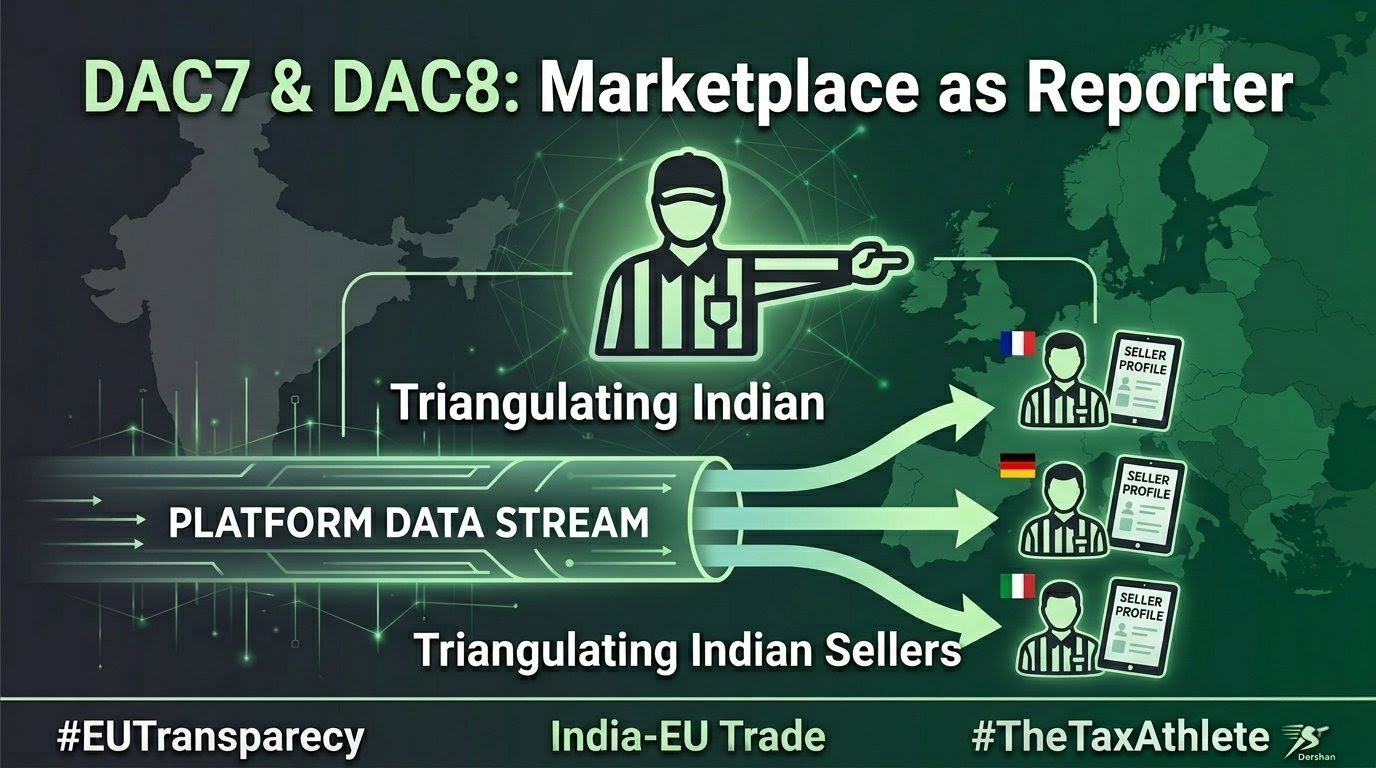
Global Trade & Indirect Tax — Part 5 Warm-Up In EMEA E-Invoicing: Preparing for the ViDA Shift, we tracked how the EU is rebuilding its VAT backbone around digital invoices. Before that, in The Green Ledger: Understanding CBAM for Indian Manufacturers, we showed how carbon costs are now baked into the price of your EU
-
CESOP: The EU Payment Surveillance System Every Indian Business Must Know

CESOP Explained: The EU Payment Surveillance System Every Indian Business Must Know Warm-Up — EU Power Play Series, Post 4 We have been building through this series one regulation at a time. In Post 1, we covered the EU Carbon Border Adjustment Mechanism (CBAM) — the carbon levy that now applies to steel, aluminium, cement,
-
ViDA: The Three-Pillar EU VAT Endurance Event Every Indian Business Must Train For

Warm-Up — EU Power Play Series We have been building through this series one discipline at a time. In Post 1, we covered the EU Carbon Border Adjustment Mechanism (CBAM) — the carbon tax that Indian exporters must now account for on every shipment into Europe. In Post 2, we broke down EMEA e-invoicing requirements
-
EMEA E-Invoicing 2026 Rollouts and What They Mean for Real-Time Compliance

Global Trade & Indirect Tax Series Warm-Up: From Carbon to Digital In the last post in this series, The Green Ledger: India, CBAM and the Carbon Tax Indian Exporters Are Already Liable For, I broke down how environmental levies are turning into the new heavy lift for manufacturers selling into Europe. If CBAM is the
-
The Green Ledger: India, CBAM, and the Carbon Tax Indian Exporters Are Already Liable For
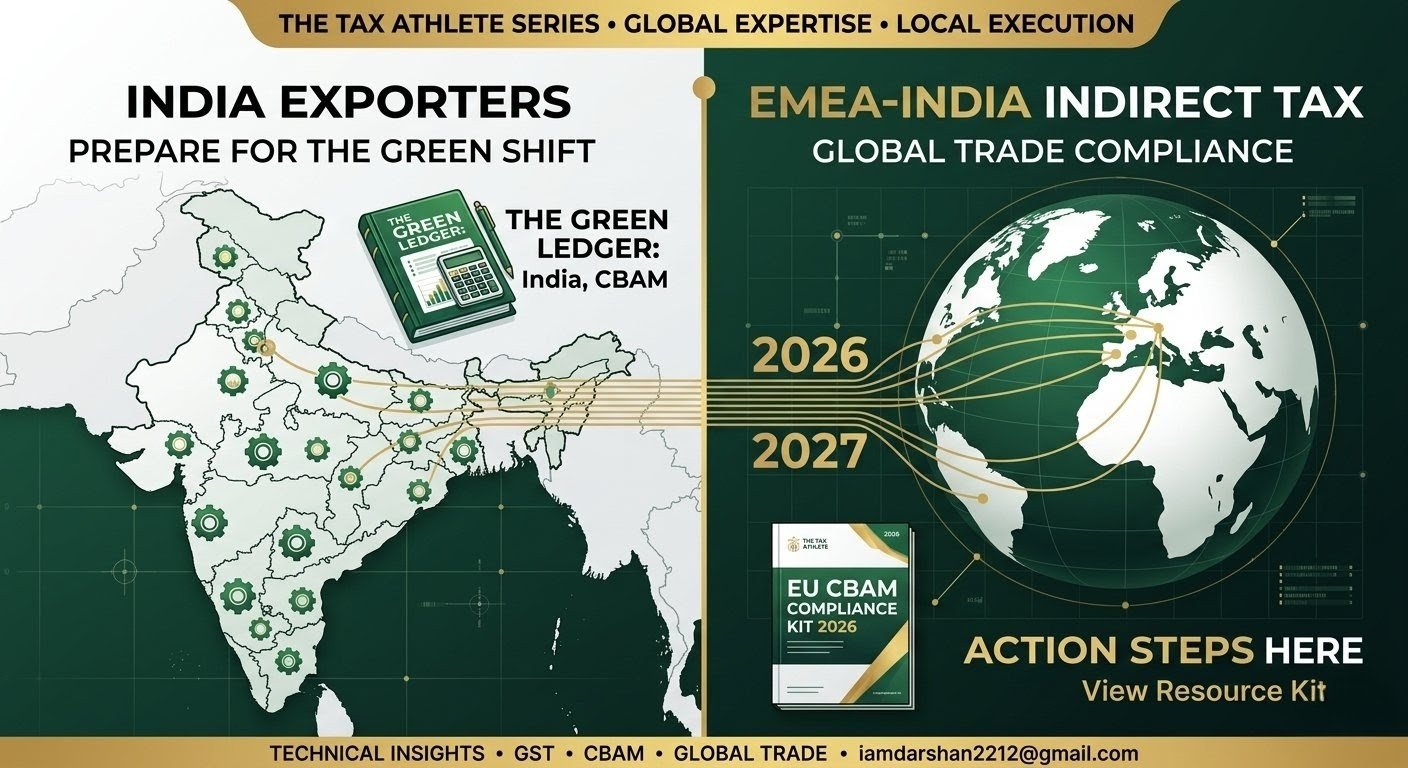
The Green Ledger: India, CBAM and the Carbon Tax Indian Exporters Are Already Liable For Global Trade & Indirect Tax Series The Green Ledger: India, CBAM and the Carbon Tax Indian Exporters Are Already Liable For The EU’s new carbon border mechanism is not a future threat. It is a current financial liability, and the
-
The IPL Income Ledger: How Billion-Dollar Franchises Build Their Muscle

IPL Economics Series The IPL Income Ledger:How Billion-Dollar Franchises Build Their Muscle From the BCCI central pool to global franchise networks — a complete breakdown of the revenue engine behind Indian cricket’s most valuable teams. Darshan — The Tax Athlete April 2026 ~12 min read This post is part of the IPL Economics Series. If
-
The IPL Auction Ledger: Why a ₹20 Crore Bid is Just the Warm-Up

The Warm-Up: Where We Left Off Last week, I broke down how GST 2.0 restructures India’s entire rate architecture, collapsing four slabs into three and clearing out classification disputes that have kept tax professionals busy for years. Before that, we covered why domestic manufacturers can finally stop chasing their own refunds under Finance Bill 2026.
-
GST 2.0: India’s Rate Rationalisation Explained and What Your Business Must Do Now

The Warm-Up: Where We Left Off Last week, we tracked how Indian businesses can protect their margins when crude hits $100 and the rupee weakens. Before that, we broke down why domestic manufacturers can finally stop chasing their own GST refunds under the Finance Bill 2026. Both of those posts dealt with pressure from outside
-
The Inflation Sprint: How Indian Businesses Can Protect Their Margins When Crude Hits $100+ and the Rupee Breaks 94
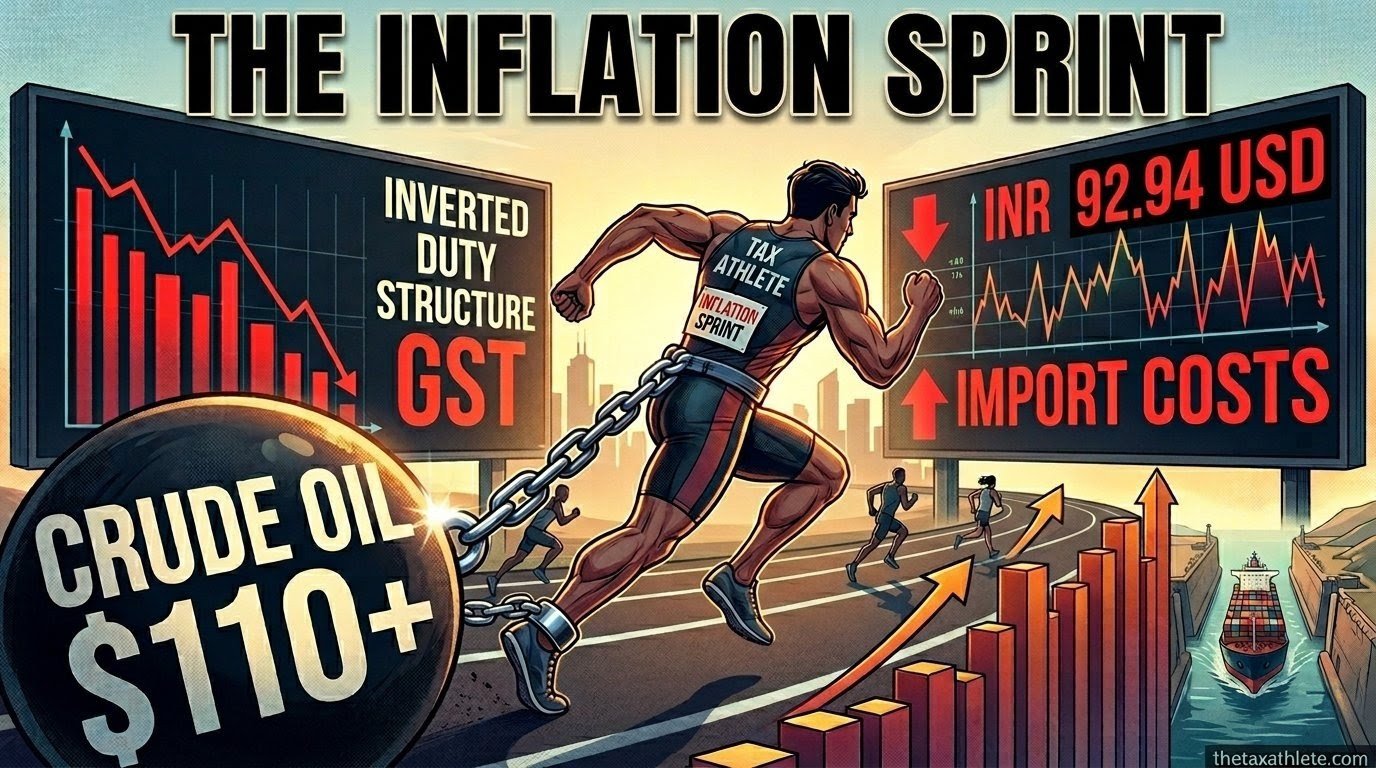
The Warm-Up: Where We Left Off Last week, we stepped off the cricket pitch and walked into the global arena. We tracked how two Indian ships — MT Shivalik and MT Nanda Devi — carried over 92,000 metric tonnes of cooking gas through a six-mile war zone corridor, while the Indian Navy kept watch overhead.